Double Pointed Needles
In a few of my patterns, like my recent Porch Goose Sweater Pattern, use Double Pointed Needles or DPNs. It’s helpful to share more about these needles, what they are used for, and where a new knitter can find them. If you are familiar with these versatile little needles, you can move through to my other posts and patterns.
What Are Double Pointed Double Pointed Needles?
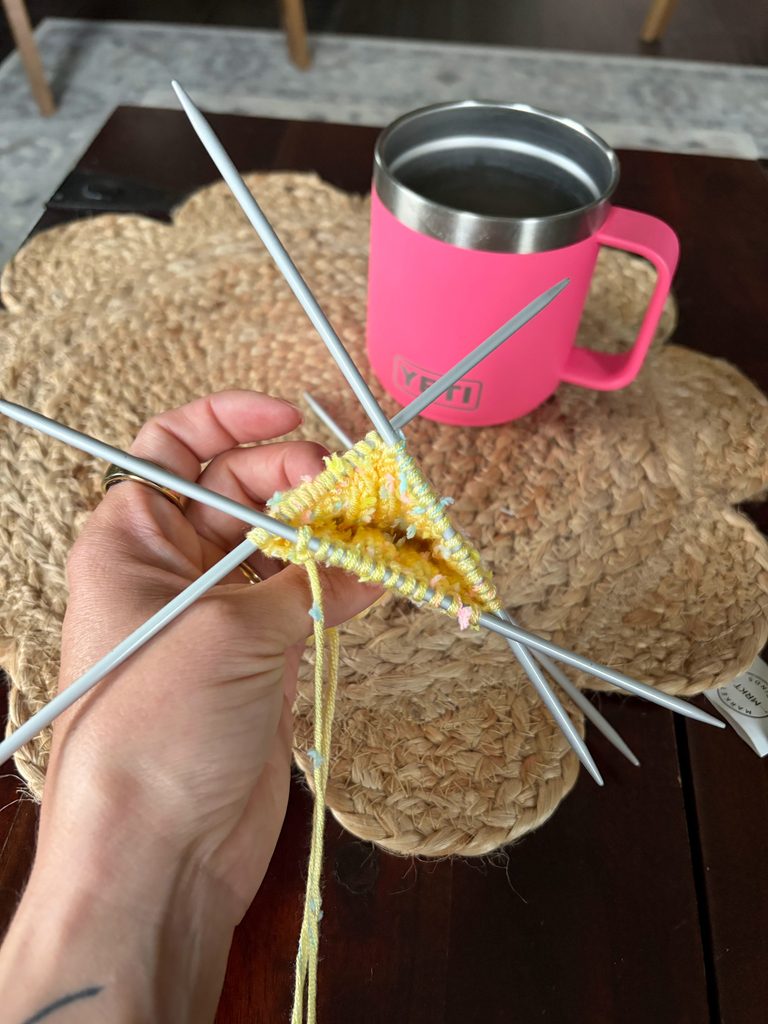
Traditional knitting needles are straight, narrow stick like needles with smooth tapered tips. Usually at the end these needles flair or have a stopper to hold the stitches on the needle, to prevent them from slipping off. This is super useful because knitting is an accumulation of loops. These loops are called live stitches. If the yarn is pulled these stitches will unravel.
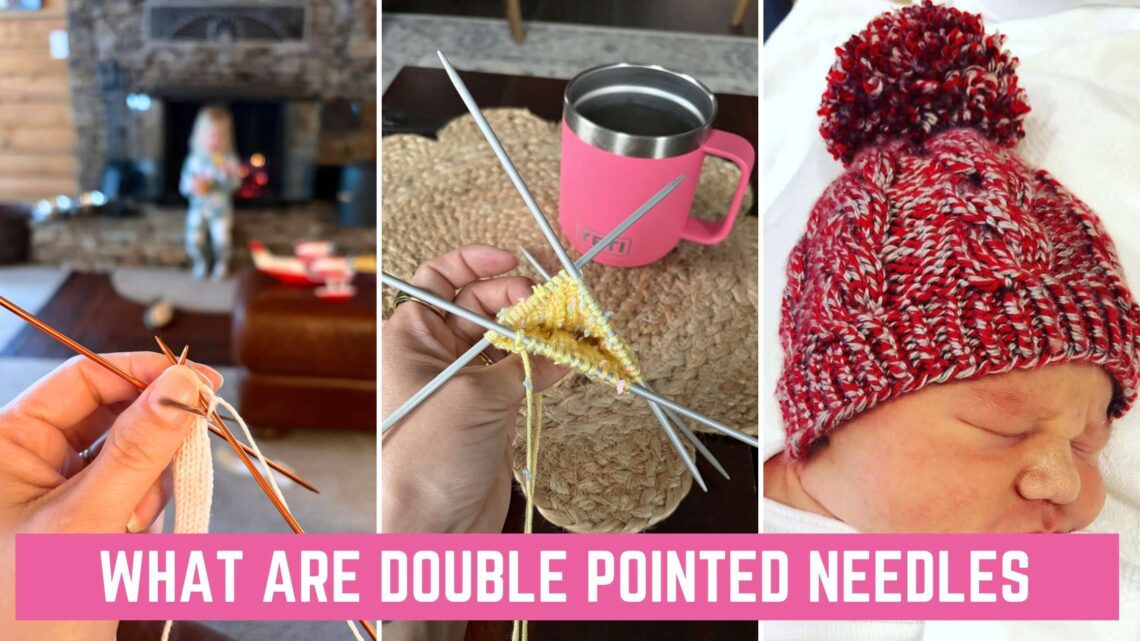
Double Pointed Needles are just what the name conveys, similar to straight knitting needles but both ends taper into a smooth point. I just said that if live stitches slide off of a needle, they unravel, so why would you want to use DPNs? When you are working in the round (continuously working in one direction adding round after round rather row after row) on a small scale, longer circular needles might become difficult. You could try to complete the project flat and seam it together but that is a lot of work and can leave a seam.
These needles come in different lengths and in every size of knitting needle. They can be used to make socks, wine bottle sweaters, small ornaments and decorations, cuffs of sweaters or entire sweaters. Some people like to use them when shaping the crown or top of a hat.
How Do DPNs Work?
So DPNs are a great alternative. There are a few ways to get started. The easiest that I find, is to cast on your stitches using one needle. Then when you have cast on all of the stitches, you can distribute them as evenly as you can across 3-4 double pointed needles. For example, the neck of my 17 inch porch goose sweater pattern calls for 40 stitches. You’ll cast these onto one needle. Then spread them out 14, 14, and 12 to make the Knit Two, Purl Two repeat easy to work.
Use a stitch marker that will clip to your project to mark the beginning of your round. The markers that sit on your needles will slide off as you work around. Simply follow the pattern instructions as you work on the needles. If you are working increases, there may come a time that you might want to switch the DPNs out for a circular needle, or a longer circular needle and work in the magic loop technique which I’ll cover in another post.
Where Do I Find Them?
Just as they come in all shapes, sizes, colors, and materials, DPNs are available at a wide range of price points. If you haven’t used them before, I wouldn’t spend a ton of money on really high end sets. I had knit for years before I found the need or the confidence to use them. Try an inexpensive metal or wooden option first. I like the metal options available at Michaels or local yarn stores. They’re relatively inexpensive and give you a solid needle to work with. I tend to break the thinner wooden ones with my tension, so this is another thing to keep in mind.
Patterns that Use DPNs
Goose Sweater Pattern
Wine Bottle Sweater
Christmas Wreath Ornaments