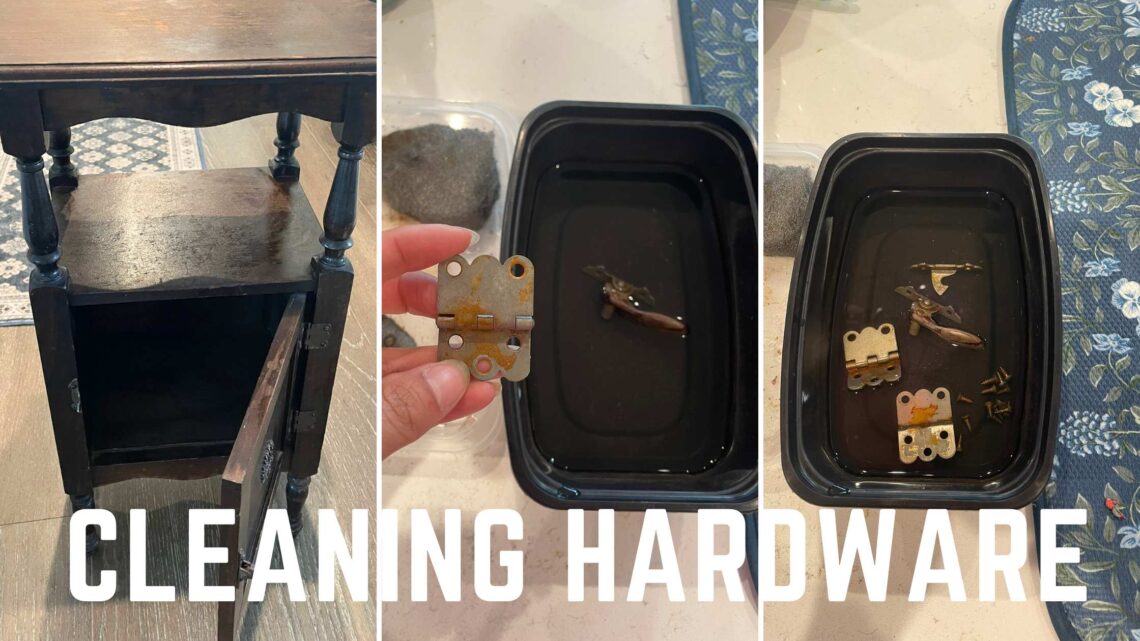
How to Clean Hardware Safely and Easily
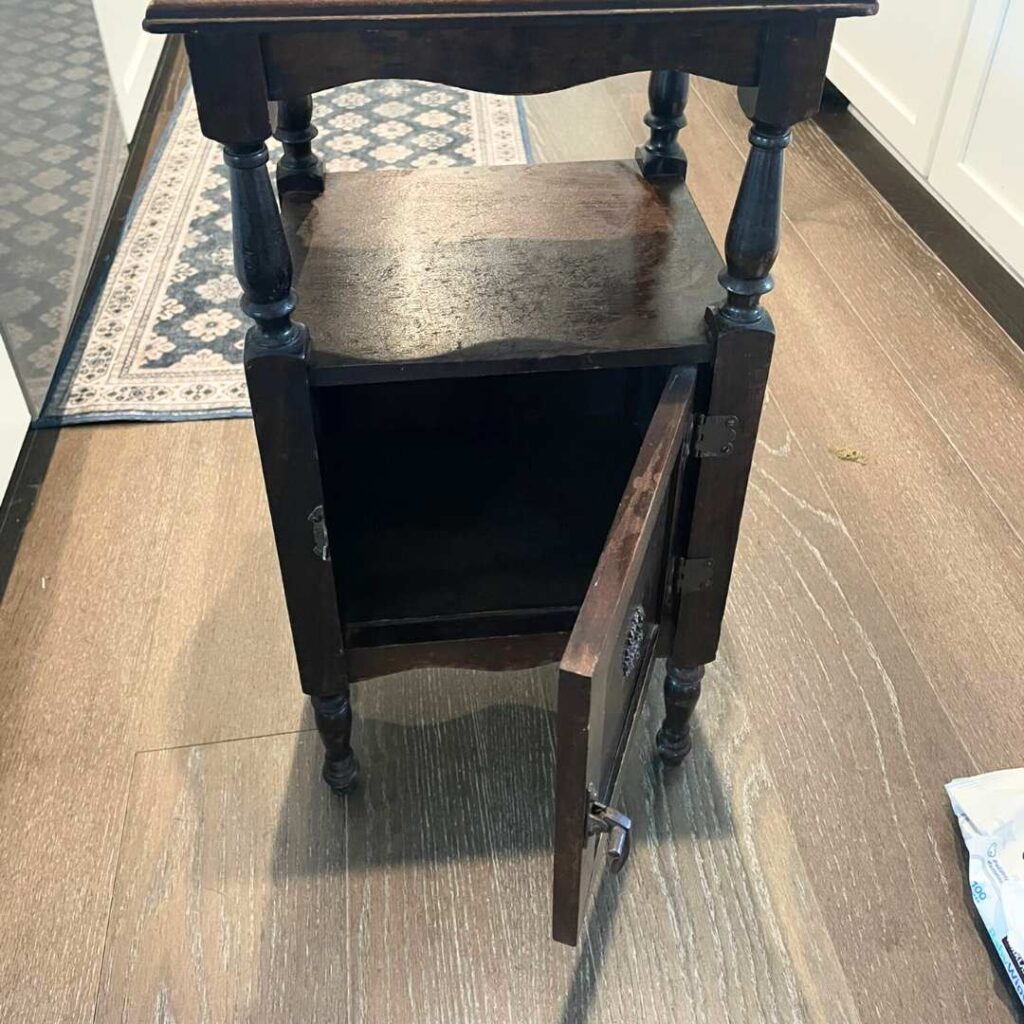
I’m a sucker for a good antique. But not all patina is welcome. When I purchased this end table off of Facebook Marketplace I was in love. It’s purported to be from the 1920’s or 1930’s and has been called a smoking table. More research to come on this piece, but for now, I’m ready to clean up the hard ware on it. In this post I’ll quickly show you how to clean hardware safely and easily. It’s so safe and easy that my kids can help me!
Mostly you need a little bit of patience. The rest, you might have around the house.
What You Need:
- Tupperware or small container
- White Vinegar
- Steel wool
- A few hours or overnight
Why This Safe and Easy Method is so Great
The steps in this process are so simple it’s almost funny. Yes, you can buy products that do the same process. These chemicals might be a little bit faster. But they are no easier. In fact, they probably require a bit more elbow grease than this method for fast and easy hardware cleaning.
This method is great for antiques because it is so gentle. White vinegar is such a gentle cleaner that it is used all over the home. You can even use it without gloves. Sometimes I’ll dilute a bit and use it to clean up the wood on antique pieces and you can sometimes lift off some stains with it too.
How to Safely and Easily Clean Hardware
Step 1: Gather Everything You Need
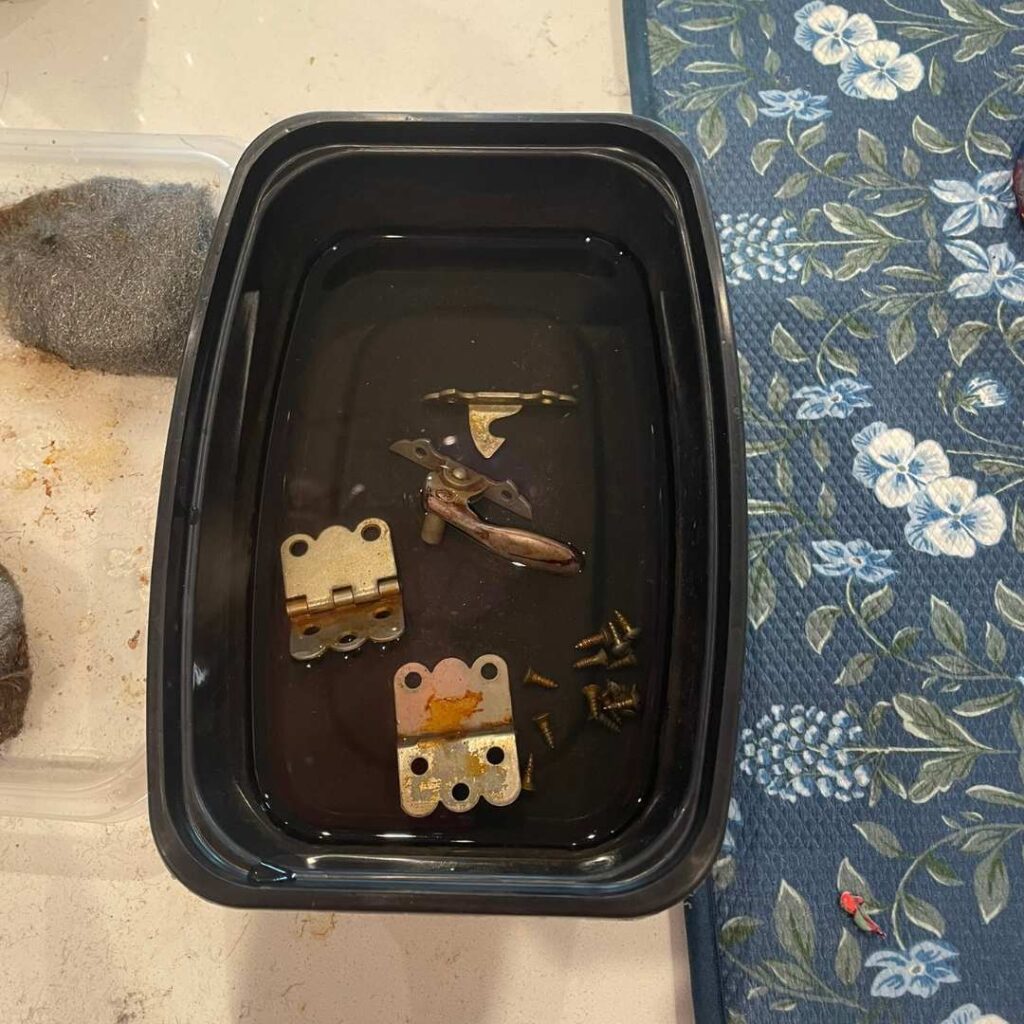
Grab your container. I like to use something that I won’t be using for food later. This is just out of abundance of caution because of the steel wool and what you are cleaning off of the metal. Steel wool shreds and creates really fine pieces. I’m sure it will all clean off but I don’t want to take any chances of anyone ingesting this.
Try to find something that is small – just big enough to hold all of your hardware and deep enough to submerge it. This will help save vinegar. You can always use the extra vinegar to clean up your antique or repeat the process with additional hardware to make it go farther.
For Vinegar, this Pittsburgh girl will always go for Heinz. Fun fact, my grandfather worked for Heinz for 49 years. He oversaw the tomato harvests and met my grandmother, who (we believe) filled pickle jars (based on her monthly manicures).
For steel wool, I like super fine but use your discretion for your particular project.
Step Two: Let It Soak
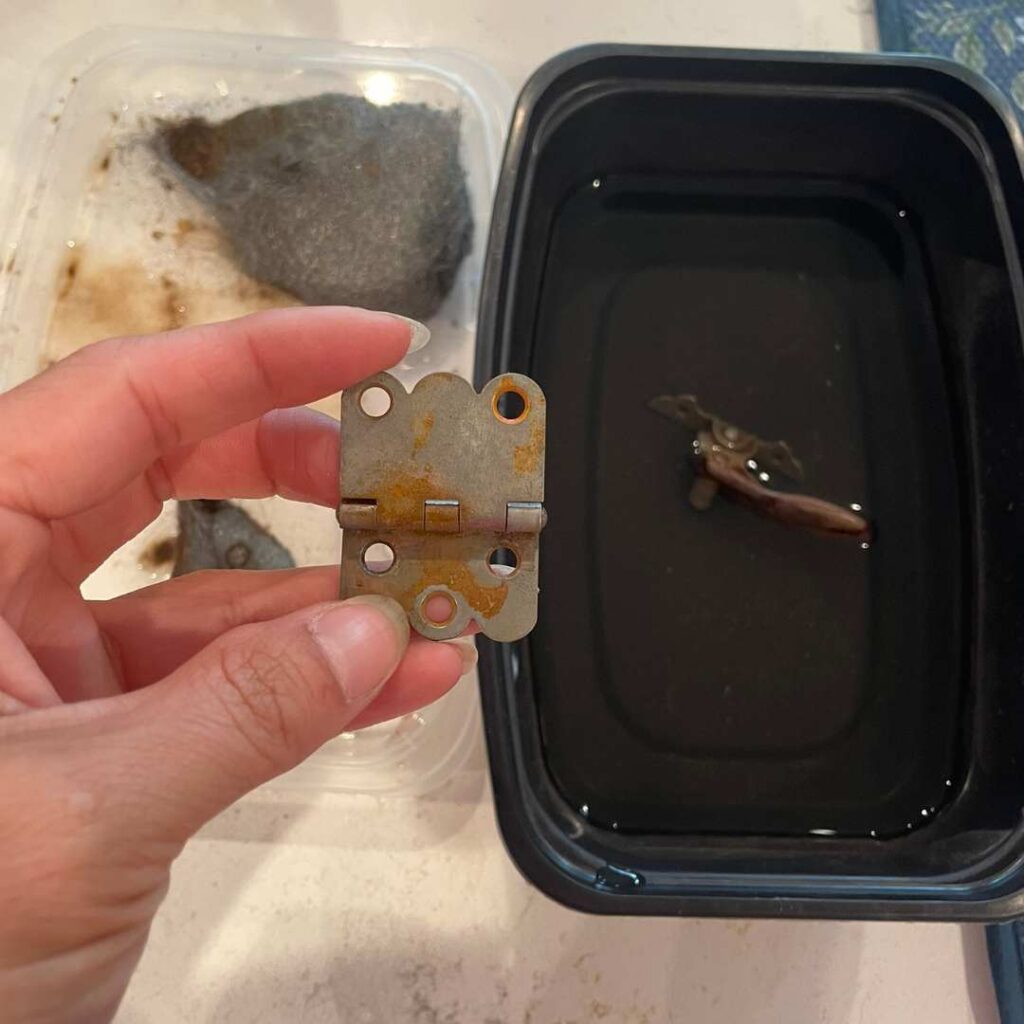
Put all of your hardware, even screws into the container and cover with the vinegar. And let them soak overnight. If you have pieces that are not totally submerged, you may need to flip them and let them soak again. I say over night because it’s an easy time frame but you can give it an hour or two and check. It all depends on the hardware, how old and dirty it is, etc.
Step Three: The Finale
Take a little bit of your steel wool. You don’t need a full piece. Gently scrub away the years of dirt and tarnish. It’s really cathartic to see how it all just rubs away. Keep gently scrubbing, using a bit of new steel wool here and there as needed.
Give your pieces a good rinse. Make sure hinges and latches can move freely. Then let them dry and you are ready to put them back on. Depending on your piece, the desired aesthetic, and personal preference you may want to condition the pieces before putting them back on the furniture. Its easier and less messy.