How a 1940’s Hat Went Viral
If you are on social media, you’ve probably seen a bunch of red hats flood your feed. What is this hat? What does it signify? Where did it come from? The Melt the Ice hat is a pattern that is circulating the internet, social media, and yarn shops across the world. But why does it matter? A clue lies in the pattern name. This pattern was made in Minneapolis after the recent atrocities committed by ICE. Let’s take a look at how a 1940’s hat went viral today.
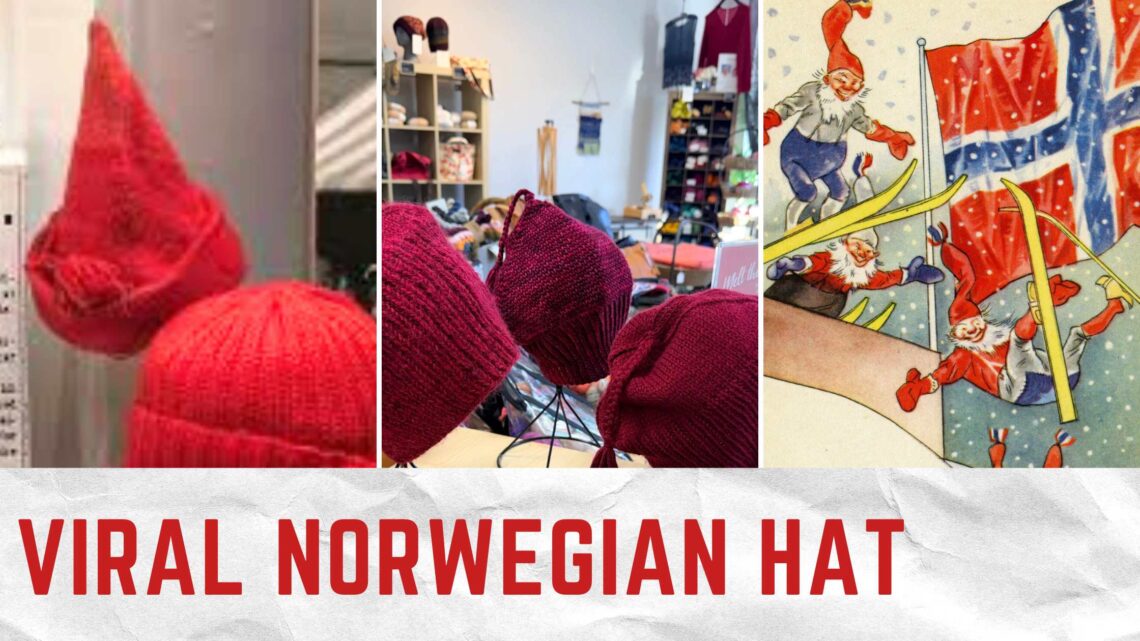
In the header you’ll see a photo from exhibition, Norwegian Home Front Museum (Wolfmann / Wikimedia Commons / CC BY-SA 4.0), the Melt the Ice Hats from Needle & Skein, and a vintage protest Christmas Card featuring the hats from ScienceNorway.no.
Who Made the Hat:
The Melt the Ice Hat pattern was born of the shop Needle & Skein in Minneapolis. It sounds like after the recent murders, the air hung heavy for their knitting circle. Employee Paul Neary knew something had to be done. But where to start? Neary took inspiration from a Norwegian hat from the 1940s.
Follow Needle & Skein on Instagram
Follow Needle & Skein on Facebook
The Inspiration:
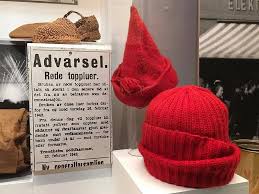
Under Nazi occupation in Norway, a red hat quickly when viral by our modern terms. This “nisselue” hat, was a 1940’s take on Santa’s hat often featured on Christmas cards at the time. According to Mats Tangestuen, who is the director for Norway’s Resistance Museum in Oslo, the hat was supposed to be a nonviolent symbol to spread hope in a very dark time. This is starting to sound familiar no? It was popularized sometime around September of 1941. These red hats spread through Norway. Here, knitting was a commonly held skill. In fact, during the time of the second world war, knitting was a very widely held skill. Many women in the US were called upon to knit garments for soldiers serving overseas.
Within about two years, the Nazis had outlawed the hat. Think about that, a knitted hat held so much symbolism and hope that it was outlawed. Anyone down to 14 years of age could be punished for wearing a red hat.
For the people of Minneapolis, the state with ironically the largest Norwegian population in the US, the presence, violence, and operation of ICE, was beginning to feel like an occupation. (According to Wikipedia, about 13% of the state claims Norwegian ancestry.)
Knitting as an Act of Defiance:
Beyond a 1940’s hat going viral, knitting has long been used as an act of defiance. Let’s rewind the clock a bit to World War One in Belgium. A grandmother used her knitting, purls and dropped stitches, to record trains and troop movements. Later she passed this knitted garment to a spy. This began the network of elderly ladies spying for the resistance. Later in World War Two, spies like Phyllis Latour would hide codes written on silk around her knitting needles and hide them in her hair.
Knit the 1940’s Hat that went Viral:
You too can become a part of this movement. Grab the red yarn from your stash, or support your local yarn shop and buy a skein or two, or three. Purchase the pattern here. The proceeds from this pattern are being donated immigrant aid agencies to help those being affected by ICE.



One Comment
Pingback: